Build the skill before you need it.
A flexible bronchoscope lets you see along the airway and guide a tracheal tube into the trachea. Before learning the movements, understand what this approach offers, what can defeat it, and where your own practice needs to begin.
Awake describes the strategy. Flexible bronchoscopy describes the instrument used to carry it out. FBI can also be used in selected anesthetized patients.
From view to tube
Find the route. Guide the tube. Confirm its position.
A short, captioned model demonstration will separate the scope reaching the trachea from the tube being correctly placed. The text above is an orientation, not a procedural sequence.
PAC production brief, 2026 · Footage and clinical review pending.Build the skill before you need it.
Credit: Protected Airway Collaborative · Owner-created film
Local review objectFlexible bronchoscopy in the age of video laryngoscopy.
Video laryngoscopy has changed airway practice. It has not made every airway, route, or operator problem equivalent.
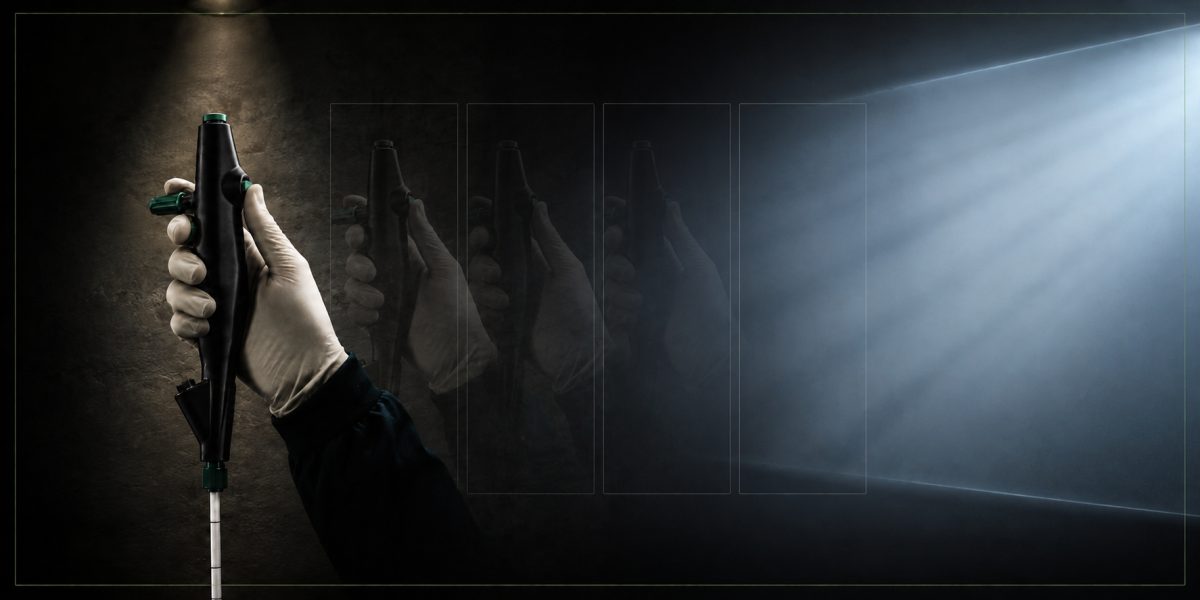
The Vanishing Repetition
The instrument remains fully present while its repetitions fade. The empty frames stand for opportunities to practice, not for a technique that has become obsolete.
Look again: follow the repetitions until the frames are empty.
Derived from the owner-authorized FBI 430 poster image. Source and final production-credit review remain open.
Hold · source and production-credit reviewVideo laryngoscopy (VL) resolves many routine and difficult laryngoscopy problems. In settings where clinicians reach for it first, the flexible bronchoscope may be used less often. Fewer encounters leave less opportunity to build and maintain fluency.
Restricted mouth opening, altered anatomy, or a selected route through a supraglottic airway may favor flexible bronchoscopy. It can support an awake strategy and work alongside other devices. The useful instrument is the one that fits the patient, route, and available skill.
Carry forwardWhere will your next useful repetition come from?
References
- Law, Thana, and Milne · Declining awake tracheal intubation, 2014–2020
Awake intubation use fell by about 50% in one tertiary center. This describes awake intubation, not all FBI; it does not establish a global rate or prove that VL caused the decline.
- Difficult Airway Society · Awake tracheal intubation guideline
Supports selecting the route and instrument for the patient and the operator, rather than treating one device as universally preferable.
When you need them breathing.
Awake tracheal intubation may be considered when losing spontaneous ventilation or intrinsic airway tone could make the airway more difficult to manage, or when induction of anesthesia before the trachea is secured may carry substantial peri-intubation hemodynamic risk.
Explain the plan, support cooperation, and establish effective topical anesthesia. An awake patient should be prepared for the scope and tube, not simply asked to tolerate them.
Preserve spontaneous breathing and airway tone while securing the trachea. These are goals, not guarantees: obstruction, hypoventilation, and hemodynamic deterioration can still occur.
Sedation can compromise the advantage you are trying to preserve. It must not substitute for inadequate topicalization. Patient preparation is the work of FBI 432 →
Does choosing an awake approach mean you must use a flexible bronchoscope?
Consider the distinction
No. Awake is the strategy; flexible bronchoscopy, video laryngoscopy, or a combined technique may provide the route. Select the instrument separately from the decision to preserve breathing.
Created by the Protected Airway Collaborative, 2026
The patient, the airway, and the clock.
When is flexible bronchoscopic intubation the right move—and when is it a bad idea? The indications, contraindications, and practical limitations listed below give you a starting point. The decision still depends on the patient in front of you, the time you have, and what you and your team can safely deliver. Before choosing an awake approach, ask yourself four questions.
Consider the loss of spontaneous ventilation, airway tone, or hemodynamic stability—and whether you could oxygenate the patient if intubation failed.
Consider cooperation, topicalization, contamination, airway narrowing, route, and other reasons the technique may fail or cause harm.
Can the patient tolerate preparation here, with this team? Urgent imaging or surgery affects the plan, but does not remove the need to secure a safe airway strategy before transfer or deterioration.
Be honest about your current ability, equipment, assistance, and rescue plan. If this is not a procedure you should attempt under the present conditions, call for help or choose another approach.
The workable plan is always context-dependent.
The same airway. A different margin.
A cooperative adult needs tracheal intubation and has markedly restricted mouth opening. Oxygenation is stable with support. An experienced operator, suitable equipment, and a rescue team are available; there is time to prepare an awake approach.
The starting conditions are unchanged. Restricted mouth opening may favor a flexible route, but does not by itself select the entire airway plan.
Which of the four questions matters most now? Explain what must change in the plan before opening the discussion.
Compare your reasoning
Ask what induction could cost this patient, then check that the selected route, topicalization, equipment, operator, and rescue plan are workable. Favorable conditions support considering awake FBI; they do not make it mandatory.
Created by the Protected Airway Collaborative, 2026. Fictional teaching case; guideline-informed discussion, not a selection score or a patient-specific recommendation.
Potential reasons to consider—or reconsider—awake FBI
Reasons to consider an awake approach
- Difficult intubation or rescue. Anticipated difficulty securing the trachea, especially when facemask or supraglottic ventilation, or emergency front-of-neck access, may also be difficult.
- Limited apnea tolerance. Oxygen reserves may be exhausted before an intubation or rescue attempt can succeed.
- Dependence on airway tone. Induction could turn a partially obstructed airway into a complete obstruction.
- Aspiration risk with a difficult airway. This combination may favor an awake plan; aspiration can still occur.
- Physiologic or hemodynamic fragility. Consider whether securing the trachea before induction offers a safer margin. An awake technique does not remove the need for resuscitation.
When the bronchoscope fits
Restricted mouth opening, fixed neck flexion, or altered head-and-neck anatomy may favor flexible bronchoscopy. Check that the selected oral or nasal route is safe and the tube can pass.
Reasons to reconsider awake FBI
Absolute contraindication: patient refusal
A patient with decision-making capacity declines the planned awake procedure.
Relative contraindications and practical limits
- Insufficient cooperation. Agitation, confusion, or distress prevents a controlled attempt despite explanation and support.
- Inadequate topicalization. Effective airway anesthesia cannot be achieved safely, including an unresolved local-anesthetic allergy. More sedation is not the solution.
- No usable view. Blood, vomit, or secretions obscure the path despite suction.
- Critical narrowing. The scope or tube may not pass and could worsen obstruction. A planned awake invasive airway may be safer.
- Immediate deterioration. Oxygenation or circulation cannot support the preparation time. Escalate to the emergency airway plan.
- Missing skill or support. Obtain experienced help, appropriate equipment and monitoring, and a workable rescue plan. Defer or move to a better-supported setting when possible.
These are guideline-informed prompts, not a validated selection score. Reconsidering flexible bronchoscopy does not necessarily mean inducing anesthesia: awake video laryngoscopy, a combined technique, or an awake front-of-neck approach may fit better.
The operator is part of the airway plan.
The bronchoscope may be in the room even when the skill is not ready under pressure. For awake tracheal intubation, experience matters more than seniority, and limited clinical exposure leaves fewer opportunities to build and maintain fluency.
Background photograph: BFlex bronchoscopy with shared display. Supplied and authorized by project owner; photographer and source credit pending. View collection photograph →
What should your next repetition improve?
- ChooseOne movement or task
- ObserveWhat the tip actually does
- Get feedbackA specific correction
- RepeatCheck whether it helped
Name the goal before picking up the trainer. Ask a colleague to watch the movement or the team exchange you want to improve. Practice frequency and support should fit the learner and the task.
In one randomized study, regular brief simulator practice increased confidence without improving the measured simulator intubation performance. Feeling more familiar is useful feedback about confidence—it is not proof of better performance.
Simulation can develop skills, but clinical transfer is not assured. Look for an observable improvement, with feedback and appropriate supervision.
One movement.
One correction.
Watch the hands and tip together.
A learner attempt, a specific coaching cue, and the repeat. Notice what changes after feedback.
PAC production brief, 2026 · Footage, captions, and clinical review pending.A flexible view becomes an airway technique.
The history is not a procession of devices. Each transition changed what the operator and the team could see, where the instrument could go, and how the technique could be taught.
Select a milestone to open its object.
Explore the objects and the longer history
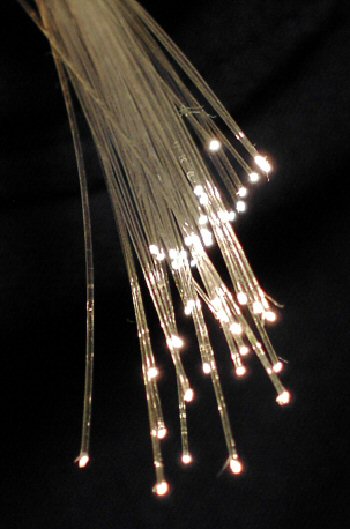
Hopkins and Kapany describe a coherent bundle of glass fibers that carries an image around a curve. The airway instrument does not exist yet. Its optical possibility does.

Peter Murphy passes a flexible choledochoscope through a tracheal tube and reports fiberoptic nasal intubation.
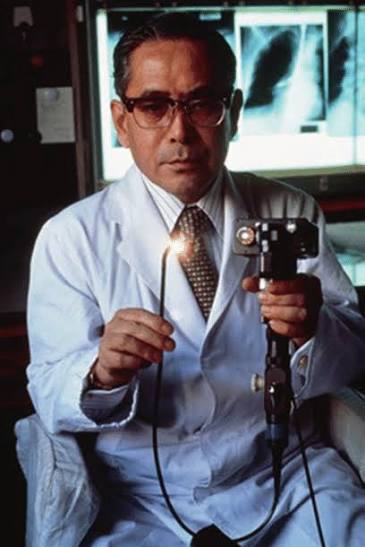
Shigeto Ikeda and colleagues describe a purpose-built flexible bronchofiberscope. The instrument reaches beyond the limits imposed by rigid bronchoscopy.

Ikeda and Asahi Pentax develop a prototype video bronchoscope with a distal CCD sensor. The operator now looks at a monitor rather than through the eyepiece, opening the view to the rest of the team.

Single-use flexible video scopes add another model of portability, readiness, and reprocessing. A new supply model does not make every device or every generation perform the same way.

Flexible bronchoscopy may stand alone in selected cases. It may also work through a supraglottic airway, during an exchange, or beside video laryngoscopy.
Why we say flexible. Early instruments transmitted the image through optical fibers. Many modern scopes use a distal video sensor. “Fiberoptic” persists in the technique's name, but does not describe every modern device.
The rail dates identify milestones, not the dates of the photographs. Publication, invention, prototype development, and commercial release are different events.
References
- Hopkins and Kapany: A Flexible Fibrescope, using Static Scanning
- Murphy: A fibre-optic endoscope used for nasal intubation
- Ikeda, Yanai, and Ishikawa: Flexible bronchofiberscope
- Image credits and reuse terms: BigRiz/Wikimedia Commons, CC BY-SA 3.0. The Peter Murphy scope, Shigeto Ikeda, later Pentax video bronchoscope, single-use flexible endoscope group, and contemporary BFlex images were supplied and authorized for use by the project owner; originating-source and formal-credit metadata remain pending where not yet documented.
How this PACscape builds the skill.
Start with the device, prepare the patient when an awake approach is planned, then bring the movements into the procedure. The later Galleries extend that foundation into rescue, exchange, and combined techniques.
Foundation · 431–433Follow the sequence or choose the Gallery that matches your next practice goal. Public orientation: 430. Member Galleries: 431–436.
Begin with the instrument in your hands.
You have the reasons for building the skill. Before moving on, try explaining the model without looking back. Then take one practice goal into FBI 431.
How does flexible bronchoscopic intubation place a tube?
Compare your explanation
The bronchoscope provides a view along the airway and a guide for the tube. Reaching the trachea with the scope does not prove that the tube is correctly placed. Tube position requires confirmation; for awake intubation, visual confirmation and capnography precede induction.
Why might an awake strategy help—and what does it not guarantee?
Compare your explanation
It may preserve breathing and airway tone while the trachea is secured. It still depends on preparation, cooperation, a feasible route, and a team able to manage failure. It does not guarantee oxygenation, hemodynamic stability, or success.
No score and no prerequisite. Use the explanation to find what you want to revisit.
References · The model and the learning design
- Difficult Airway Society · Awake strategy and confirmation of tube position
- Larsen, Butler, and Roediger · Repeated retrieval with feedback and long-term retention
This medical-education trial supports recalling and revisiting knowledge. It does not validate this two-question exercise or establish procedural competence.
FBI 430 provides orientation, not evidence of procedural competence or clinical authorization. The Practice Studio develops physical skills; local supervision and assessment still apply. Installation Guide in preparation.
Keep a place for airway practice.
Get PAC lessons and updates about live training by email, including a lesson to return to and a guide to what PAC Premium includes.