
NextGen Learning To Elevate Your Airway Practice
Overview
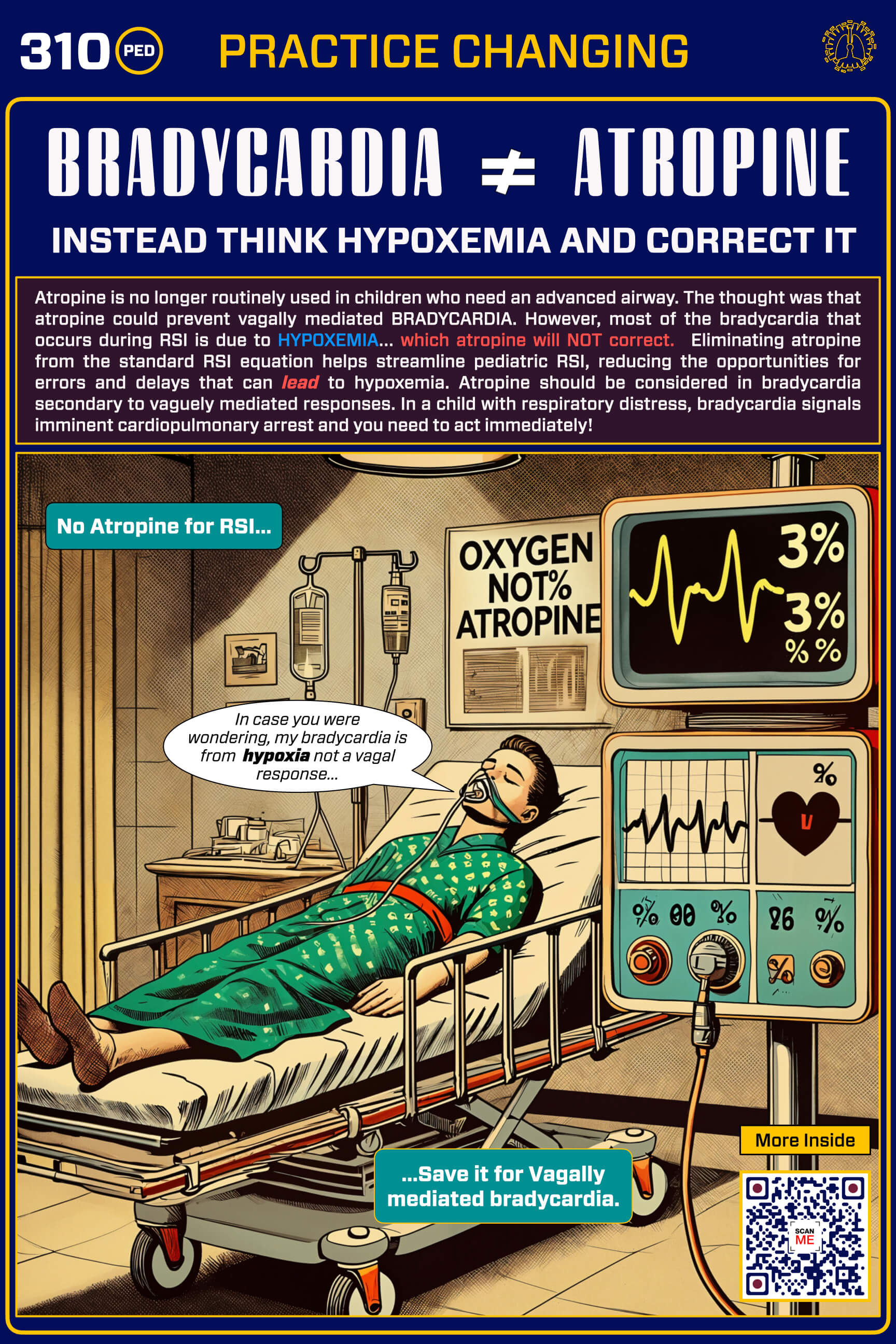
There was a time when almost all pediatric patients were pretreated with atropine prior to intubation to prevent bradycardia. Now, the use of this medication is more selective. Here, we cover the history, the evidence, and the current best practices regarding the use of atropine during pediatric intubations and resuscitations.

Atropine
Addressing Bradycardia
A Historical and Evidence-Based Review
Atropine, a muscarinic antagonist, has historically been used during pediatric intubation to mitigate the risk of bradycardia, which can occur due to vagal stimulation from laryngoscopy, hypoxia, and certain medications like succinylcholine. Here are the key historical rationales for atropine use:
- Immature Autonomic Nervous System in Infants: Infants, especially neonates, have a parasympathetic nervous system that is more dominant than their sympathetic system, making them prone to bradycardia.
- Succinylcholine-Induced Bradycardia: Early studies and clinical experience suggested succinylcholine, particularly when given as a repeated dose, could lead to profound bradycardia, a risk mitigated by atropine pretreatment.
- Vagal Reflexes from Airway Manipulation: Direct laryngoscopy and tracheal manipulation stimulate the vagus nerve, leading to potential bradycardia, particularly in younger children.
- Standard Practice for Decades: Atropine was routinely included in pediatric intubation protocols, particularly in the pre-hospital and emergency settings.
Shift in Practice: Emerging Evidence & New Guidelines
Over the past two decades, there has been a shift in the routine use of atropine, driven by:
- Recognition of Unnecessary Use: Many intubations, particularly in well-prepared settings, do not result in clinically significant bradycardia.
- Potential Risks of Atropine: Increased myocardial oxygen consumption, tachycardia, and concerns about masking hypoxia-induced bradycardia.
- Growing Emphasis on Individualized Care: More selective use rather than a blanket approach.
Current Evidence on Atropine Use in Pediatric Intubation
1. Bradycardia Risk with and Without Atropine
- Studies have demonstrated that not all children experience significant bradycardia during intubation.
- A 2010 randomized controlled trial found that atropine did not significantly reduce the incidence of bradycardia in all cases but may still benefit high-risk groups.
2. Atropine and Succinylcholine
- The risk of bradycardia is higher with repeated doses of succinylcholine, reinforcing selective use rather than universal prophylaxis.
3. Atropine in Neonates and Infants
- Neonates, especially preterm infants, remain at the highest risk for severe bradycardia due to an underdeveloped sympathetic response.
- Atropine may still benefit neonates undergoing intubation, particularly in emergencies or less-controlled settings.
4. Alternative Approaches
- Adequate Preoxygenation & Gentle Laryngoscopy: Reducing hypoxia and minimizing vagal stimulation can prevent bradycardia.
- Use of Neuromuscular Blockade: Rocuronium or non-depolarizing agents in rapid sequence intubation (RSI) are less associated with bradycardia than succinylcholine.
Current Recommendations for Atropine Use
- Routine prophylactic use is no longer recommended for all pediatric intubations.
- Atropine (0.02 mg/kg, minimum dose 0.1 mg) may still be considered in specific high-risk scenarios:
- Neonates (<1 month old): Particularly those undergoing emergent intubation or with comorbidities.
- Children receiving succinylcholine: Especially when a second dose is anticipated.
- Patients with known or suspected high vagal tone: Such as those with congenital heart disease.
- Bradycardia-prone scenarios: Including repeated laryngoscopy attempts, hypoxic conditions, and severe hemodynamic instability.
The Bottom Line
While atropine was historically a standard part of pediatric intubation, current evidence supports a more selective approach. The focus has shifted towards optimizing preoxygenation, careful technique, and judicious medication use rather than universal atropine administration. However, in neonates and select high-risk cases, atropine remains an important tool to prevent bradycardia and ensure safe airway management.
What’s Next
Find Or Click Me
Nice work—you’re through this section! To keep going, scan the QR code on the physical poster at the next station in our pop-up training space to access the next set of digital content. Prefer to stay online? Just click the poster image here to continue your journey.

You must be logged in to post a comment.