
NextGen Learning To Elevate Your Airway Practice
Rememeber This

Important: Address Hypotension Before Intubation
(Because if you don’t, it will only get worse…)
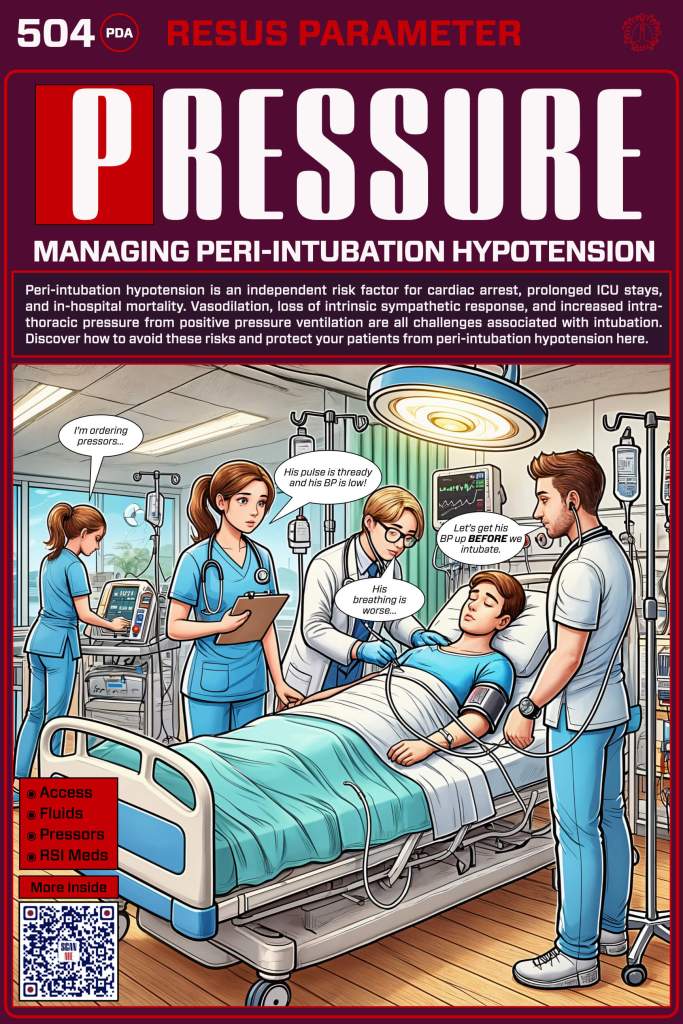
Peri-intubation hypotension is a significant sign of impending hemodynamic instability that typically worsens after intubation. In patients with respiratory failure, the time you have to address this may be short. You need a plan for rapid resuscitation that addresses hypotension quickly as you’re preparing to intubate. Being able to address hypotension before intubation is critical because the process of intubation, particularly with rapid sequence intubation (RSI), can worsen hemodynamic instability and lead to cardiovascular collapse. Here’s why:
Why Hypotension Worsens in the Peri-Intubation Period
1. Loss of Compensatory Mechanisms
- Shock patients rely on sympathetic drive (e.g., increased heart rate and vascular tone) to maintain blood pressure.
- Induction agents (e.g., etomidate, propofol, midazolam) and paralytics blunt these reflexes, leading to vasodilation, bradycardia, and reduced cardiac output.
2. Positive Pressure Ventilation & Decreased Preload
- Spontaneous breathing creates negative intrathoracic pressure, which helps venous return.
- Mechanical ventilation (positive pressure) increases intrathoracic pressure, which reduces venous return to the heart, lowers cardiac output, and can exacerbate hypotension.
3. Induction Agent-Related Hypotension
- Propofol and benzodiazepines cause vasodilation and myocardial depression, worsening hypotension.
- Even etomidate, a more hemodynamically stable choice, doesn’t provide cardiovascular support.
- Ketamine, while better tolerated, can still cause hypotension in catecholamine-depleted patients.
Key Pre-Intubation Optimization Strategies
Addressing hypotension before you intubate is the first P in peri-intubation resuscitation. To help you prevent cardiovascular collapse from hypotension, we will cover these key strategies:
- Obtaining IO Access:
- Shock patients with collapsed veins can make IV access difficult.
- Central lines can take more time than you have.
- IO access is a fast and effective tool in time-dependent situations.
- Use of Fluids:
- IV fluids if hypovolemic.
- Blood products if hemorrhagic shock.
- Starting Pressors:
- Vasopressors for distributive shock.
- Inotropes for cardiogenic shock.
- Push-dose pressors to maintain perfusion during induction
- Optimizing Induction Choice:
- Ketamine (if no catecholamine depletion).
- Etomidate for stable hemodynamics.
- Lower doses of sedatives in critically ill patients.
Critical Actions Rapid Review
Bottom Line
Failing to address hypotension before intubation can precipitate rapid cardiovascular collapse. Proactively optimizing vascular access, volume status, vasopressor support, and induction agent selection can significantly enhance patient outcomes during this high-risk procedure.
What’s Next
Find Or Click Me
Nice work—you’re through this section! To keep going, scan the QR code on the physical poster at the next station in our pop-up training space to access the next set of digital content. Prefer to stay online? Just click the poster image here to continue your journey.


You must be logged in to post a comment.