
Protect. Isolate. Control.
Massive hemoptysis is one of those medical events that feels unreal even as it’s happening, cinematic in the worst way, blood where air is supposed to be, time compressing, the room suddenly too loud and too small. It refuses to behave like a normal airway problem. It does not respect algorithms, it overwhelms neat plans, and it punishes hesitation with terrifying speed. In these moments, the danger isn’t just bleeding; it’s how quickly the situation overwhelms attention, judgment, and coordination.
This PACscape treats massive hemoptysis for what it really is: a HALO moment where cognition, thresholds, teamwork, and recovery matter as much as technical skill. The goal isn’t perfection. It’s staying oriented, acting decisively, protecting what matters most, and getting everyone through the moment with their thinking intact.


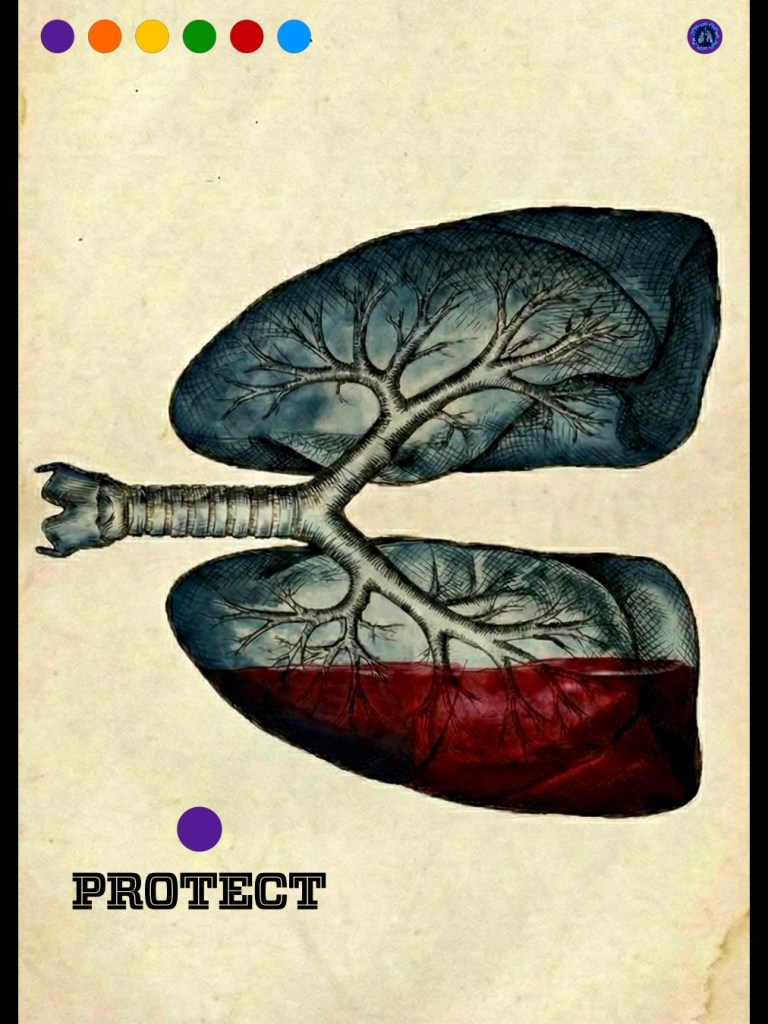

Domain 1: Threat Recognition
THREAT RECOGNITION
Massive hemoptysis is a HALO event because the danger is often misunderstood. Patients rarely die from blood loss. They die from asphyxiation as the airway fills with blood.
The clinical threat is therefore not hemorrhage alone. The threat is loss of oxygenation from airway flooding.
Early recognition depends on identifying signals that the airway is about to fail:
• Inability to clear blood or secretions
• Worsening respiratory distress
• Altered mental status
• Rapid accumulation of blood in the airway
• Hemodynamic instability
A key cognitive trap is focusing on the source of bleeding rather than the immediate airway threat. In HALO situations, clinicians must recognize that the airway is the first priority.
The initial maneuver is simple but critical: place the patient bleeding-side down in the lateral decubitus position to protect the unaffected lung.
Domain 2: Cognitive Control
COGNITIVE CONTROL
- Maintain a simple mental model under contamination:
- Protect the airway → Protect the other lung → Buy time → Get help
Massive hemoptysis creates a chaotic visual field. Blood obscures anatomy, suction fills quickly, and the environment becomes cognitively overwhelming.
The HALO discipline is to simplify the mental task.
Focus on three immediate priorities:
1. Protect oxygenation
Airway control takes precedence over diagnostic clarity.
2. Control contamination of the healthy lung
Position the patient bleeding-side down.
3. Establish access and stabilize physiology
IV access, oxygen, and reversal of coagulopathy.
If intubation is required, the goal is not elegance. The goal is airway control and the ability to clear blood.
For this reason, a large-bore single-lumen endotracheal tube (≥8.0 mm) is preferred. It allows suctioning, bronchoscopy, and selective mainstem intubation of the non-bleeding lung if needed.
Domain 3: Threshold Decisions
THRESHOLD DECISIONS
HALO events demand clear thresholds. Hesitation creates harm.
The key decision points are:
When to intubate
Intubate when any of the following appear:
• Respiratory distress
• Inability to clear blood
• Altered mental status
• Hemodynamic instability
Waiting for oxygen saturation to fall is a common mistake. Oxygenation may remain temporarily preserved while the airway is actively filling with blood.
When to move to definitive therapy
Once the airway is secured and the patient stabilized, the next threshold is to identify and control the bleeding source.
In stable patients:
CT angiography helps localize the bleeding source.
In unstable patients:
Intervention takes precedence over imaging.
The definitive therapy in most cases is bronchial artery embolization, as the bronchial arterial system is responsible for roughly three-quarters of cases of massive hemoptysis.
Domain 4: Teamwork & Communication
TEAMWORK
- Assign explicit roles:
- Airway operator
- Dedicated suction
- Team leader
- Consultant mobilizer (bronch, IR, surgery)
- Use closed-loop communication during rapid deterioration.
- Share situational awareness: bleeding side, current plan, next trigger.
Domain 5 : Aftermath & Recovery
- Transition from crisis mode to controlled care:
- Confirm tube position and patency
- Reassess lung protection
- Prepare for definitive intervention or transport
- Conduct a hot debrief focused on thresholds and cognition, not blame.
Procedures & Technical Skills
What Are the Procedural Skills in Massive Hemoptysis?:
Massive hemoptysis is primarily an airway problem, secondarily a bleeding problem. The defining procedural challenge is not only stopping hemorrhage, it is maintaining oxygenation and ventilation in the presence of ongoing airway contamination while buying time for definitive hemostasis.
Procedural Strategy
Procedural Strategy
Bronchoscopy serves both diagnostic and therapeutic roles.
Rigid bronchoscopy is preferred when available because it allows:
• airway control
• ventilation
• removal of large blood clots
However, it requires general anesthesia and specialized resources.
Flexible bronchoscopy can be performed at the bedside once the airway is secured.
Bronchoscopic techniques include:
• wedging the bronchoscope into the bleeding bronchus
• instillation of iced saline to promote vasoconstriction
• placement of bronchial blockade balloons for tamponade
Definitive treatment is typically bronchial artery embolization. Surgery is reserved for select scenarios such as trauma, pulmonary artery injury, or failure of other therapies.
Hemoptysis ABC’s
Step 1: Immediate Stabilization (“Hemoptysis ABCs”)
- Call the multidisciplinary team early
- Position patient bleeding side down (if known)
- High-flow oxygen
- Large-bore IV access
- Type and cross, labs, correct coagulopathy
Step 2: Secure the Airway
Preferred sequence:
- Video Laryngoscopy, Fiberoptic, or Rigid bronchoscopy (if expertise and equipment available)
- Large-bore single-lumen ETT (≥8.5 mm ID)
Key technical points:
- Use bronchoscopy to confirm placement
- Avoid double-lumen ETTs:
- Small lumens clog easily
- Poor suction leads to poor visualization
- Intubate the non-bleeding mainstem bronchus
Step 3: Bronchoscopic Airway Management
Objectives:
- Clear blood and clots from the non-bleeding lung
- Identify and isolate the bleeding source
Techniques:
- Avoid suction briefly to allow clot formation when wedged
- Aggressive suction with a therapeutic bronchoscope
- Place an endoblocker in the bleeding segment for tamponade
Step 4: Bronchial Blocking / Tamponade
Remove only once definitive control is achieved
Place blocker in:
- Mainstem bronchus or bronchus intermedius
- Options:
- Arndt, Cohen, EZ blocker
- Fogarty or PA catheter (less common)
- Daily bronchoscopy to reassess position and bleeding
Step 5: Mobilize for Definitive Therapy
- Multidisciplinary Activation Must Be Early
- Interventional radiology
- Interventional pulmonology
- Thoracic surgery
- Anesthesiology
- ICU
- Bronchial Artery Embolization (Preferred)
- Surgery (Selective Use)
- Late Activation = Increasing Risk of Failure
Key Takeaways
High-Yield Teaching Takeaways
- Massive hemoptysis kills by airway loss, not blood loss.
- Large-lumen access + bronchoscopy + early isolation saves lives.
- Bronchial blockade buys time, BAE stops bleeding.
- Delays, small tubes, and late team activation are common failure modes.
“An effective cough and preserved airway reflexes may be the best way to protect the airway.”
More Coming Soon


You must be logged in to post a comment.